Northern Lights Tours from Tromsø
Book excursions in Tromsø to spot the Northern Lights in Norway
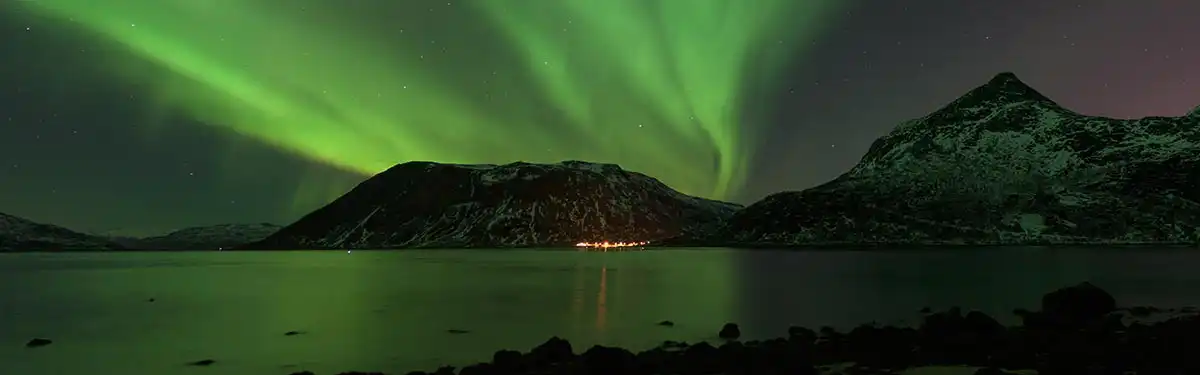
All information about Northern Lights tours and excursions from Tromsø. Tips for the hunt for the magical phenomenon of the aurora borealis in Norway.
Book Northern Lights Tours from Tromsø |
|
| Basics |
|
| Tours | There are several types of Northern Lights tours departing from the center of Tromsø. On (mini)bus tours, guides take you to remote locations free from light pollution. The routes are chosen based on current weather and aurora forecasts (more info on Northern Lights bus tours). 1. Book a bus tourFor those seeking a unique experience on the water, there are boat tours where you can admire the Northern Lights from the fjords. Far from the city, you can enjoy a peaceful view of the sky without disturbing city lights (more info on Northern Lights boat tours). 2. Book boat tours |
Why Book a Northern Lights Excursion?
Tromsø, located in the heart of the Arctic region, is one of the best places in the world to see the Northern Lights. Thanks to its favorable position within the aurora zone and relatively mild winter temperatures, this Norwegian city is a popular destination for travelers seeking this natural wonder. On a Northern Lights tour, you are usually picked up from the center near some big Tromsø hotels and driven to a location with clear skies and minimal light pollution; depending on weather conditions, this can sometimes be many miles away from Tromsø, and if necessary, the tour may even venture all the way to Finland. The guides are experts at finding the best spots to spot the aurora borealis (though there is never a guarantee!). They will explain the origins of the Northern Lights and help you set up your camera for the best photos. Since this natural phenomenon is unpredictable, the search can last several hours. With a bit of luck, you will see the sky light up in green, purple, or pink hues, dancing above the Arctic landscape.
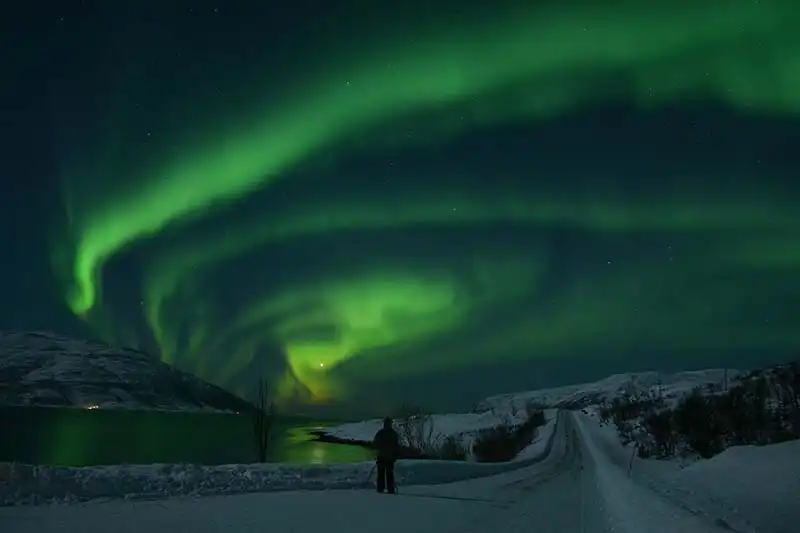
Best places to see the Northern Lights near Tromsø
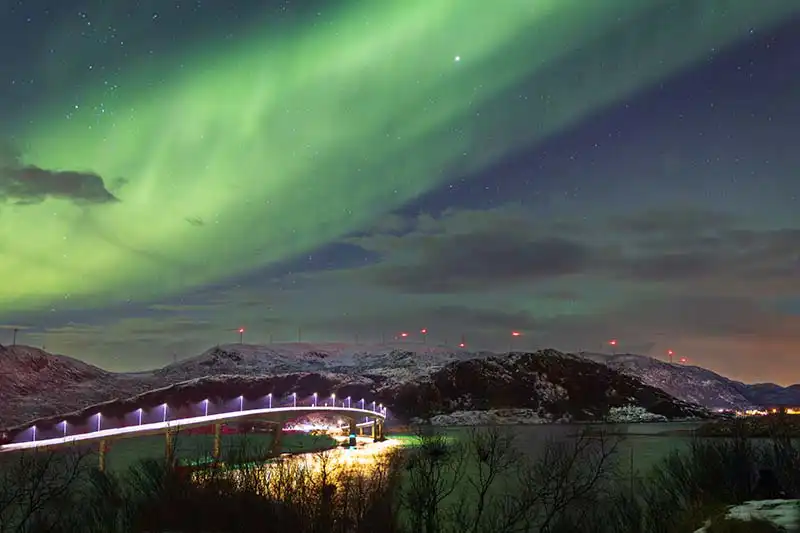
Wondering what the best place is to see the Northern Lights near Tromsø? It mainly comes down to three things: darkness (as little light pollution as possible), clear skies and an unobstructed view of the sky. You don’t need exact locations: these are the types of places where you statistically have the highest chance of success.
- 1) Inland areas towards Finland: For the highest chance of seeing the Northern Lights, tours often head inland. It is usually darker there and you are more likely to find clear skies than along the coast. On some evenings, guides even drive (partly) towards Finland if that is meteorologically the best option. This is exactly why minibus and bus tours are so popular: you can actively “chase clear skies”.
- 2) Fjords & coastal areas: Around Tromsø you’ll find fjords and coastal stretches where you can quickly escape the city lights. Near the water, you often have wide, open views of the horizon, and during strong auroras this can create spectacular reflections. Do keep cloud cover in mind: coastal areas can cloud over more quickly than inland locations.
- 3) High viewpoints: Elevated viewpoints — such as hills, mountain slopes or open plateaus — give you a big advantage: fewer obstacles (trees/buildings) and a wide view of the sky. Especially during weaker auroras, an open panorama helps a lot. Do pay attention to safety (ice/wind) and dress extra warmly: it feels colder at higher elevations.
How are the Northern Lights formed?
The Northern Lights, or aurora borealis, occur when charged particles from the sun collide with the Earth's atmosphere. This spectacular natural phenomenon begins with solar flares and coronal mass ejections, where the sun releases huge amounts of energy and charged particles, such as electrons and protons, into space. When these particles reach the Earth's magnetosphere, they are guided by the magnetic field towards the poles. There, they collide with gases in the upper layers of the atmosphere—mainly oxygen and nitrogen. These collisions cause the gas molecules to absorb energy and then emit it as light. The color of the Northern Lights depends on the type of gas and the altitude of the collisions. Green, the most common color, is produced by oxygen at about 100 km altitude. Red appears at higher altitudes, while blue and purple are caused by nitrogen. The Northern Lights are best visible in areas close to the magnetic poles, such as Norway, Canada, and Alaska, especially during dark and clear nights between September and April.
Northern Lights Excursions & Tours
Booking an organized tour significantly increases your chances of actually seeing the Northern Lights. Experienced guides know the best locations and take weather conditions into account, so you don’t have to search alone in the cold. Moreover, tours often include warm drinks, photography assistance, and interesting information about the phenomenon (compare all Northern Lights tour providers).
📌 Personal recommendation! I personally enjoyed joining this Aurora Borealis Tour. It’s a comfortable bus tour, with small groups, handy tips for photography, and the option to use thermal clothing.
FAQ – Northern Lights tours in Norway
When can you see the Northern Lights in Tromsø?The best period is roughly from September to April, when the nights are long and dark. The winter months offer many hours of darkness, but in the end cloud cover and solar activity determine whether you actually see them.
How high are your chances of seeing the Northern Lights?The chances vary per night. During the season (September–April), there are often several “good nights” per week, but there is never a 100% guarantee. The biggest spoiler is cloud cover; that’s why tours often drive to areas with clear skies and minimal light pollution.
What should you wear on a Northern Lights tour?Dress in layers: thermal base layers, a fleece or wool sweater, a wind- and waterproof jacket, ski pants, warm socks, winter boots, a hat and thick gloves. Hand warmers are also great. Many tours offer thermal suits (included or for an extra fee) — check this when booking.
Bus vs boat: which is better for the Northern Lights?A bus or minibus is usually the best option for your chances: you can flexibly drive towards clear skies, often inland (sometimes even into Finland). Boat tours are very atmospheric on the fjords and free from city lights, but you are less flexible if it is cloudy over the sea. Want the highest chance? Choose a bus. Want the experience? Choose a boat.
Can you take photos of the Northern Lights with your phone?Yes, often you can — especially when the aurora is strong. Use Night Mode or a camera app with manual settings if possible. Keep your phone as steady as you can (ideally with a small tripod) and tap to focus on the sky. A few test shots and small adjustments make a big difference.
Why book a tour for the Northern Lights?A tour increases your chances because guides monitor live weather maps and aurora forecasts and take you to places without light pollution. You don’t have to drive yourself on icy roads, and tours often include extras like hot drinks, photography help and local knowledge of the best spots.
Our readers say
4.8
(95.85%) 14
reviews
June 25, 2026
Ralph: "We had a fantastic holiday in Norway thanks to the great travel tips about activities and sights in Tromsø."